November 26, 2026
How to Estimate Press Brake Bending Cost
14 min read
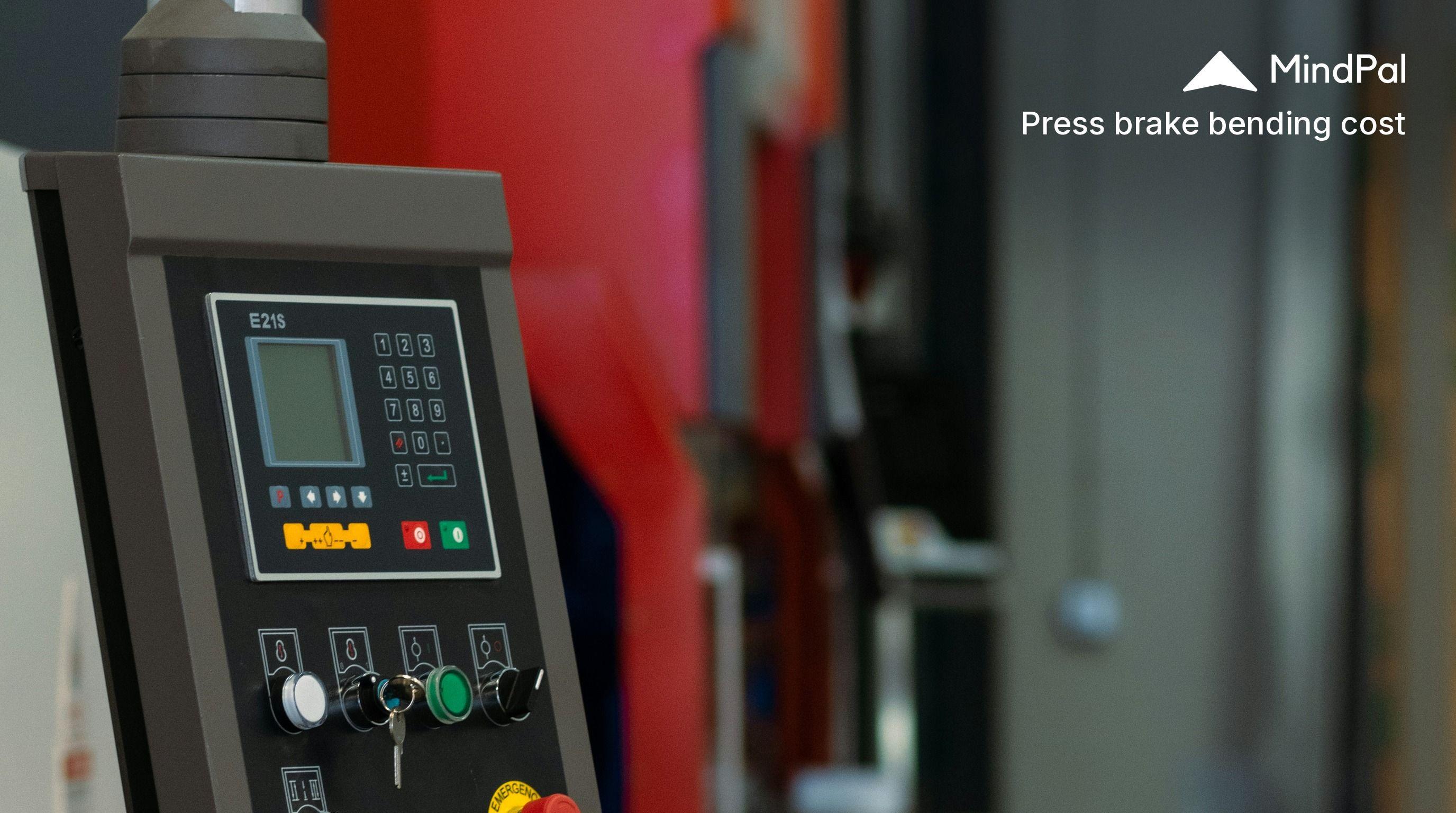
On a lot of sheet metal quotes, bending is one line with a round number in it. Then a short run of formed boxes comes through, the brake is tied up for half a shift, and the job loses money even though the laser line was right.
This guide breaks the brake line into the parts you can actually estimate. It is one step of the full fab quote in how to quote sheet metal fabrication, and it sits next to how to estimate laser cutting cost.
The short answer
Press brake cost is the brake's shop rate applied to a one-time setup plus run time per part, with the setup spread over the quantity. Run time is the number of bends times the time to place, bend and turn the part, plus handling. Hems, offsets, tool changes and large or heavy parts take longer than a simple flange.
In short:
- Setup per part = setup time × brake rate ÷ quantity
- Run cost per part = (bends × time per bend + flips and handling) × brake rate
- Brake cost per part = setup per part + run cost per part
The times and the rate are your shop's own. Nobody else's averages belong in them.
Setup vs. run time
Keep these two apart. They behave differently, and mixing them is how short runs get underpriced.
Setup happens once per job: pulling and loading the punch and die, setting stroke and backgauge, bending a first part and checking it, and adjusting until the angles and flange lengths are right. It takes about the same time whether you then bend five parts or five hundred.
Run time happens for every part: picking up the blank, placing it against the backgauge, bending, turning it for the next bend, and putting it down.
The Fabricator, the trade magazine of the Fabricators & Manufacturers Association, explains this split in job shop estimating: control and feedback methods: setup is a one-time event, the brake then cycles at its own pace, and on a small batch setup is the dominant cost, while on a large batch run time takes over. Divide setup by batch size, add run time per part, and the unit price falls as quantity rises.
Counting bends, including hems and offsets
Count bends from the flat pattern or the model, not from a glance at the drawing.
- Standard flanges. One hit each.
- Hems. Usually a pre-bend and then a flattening hit, often with different tooling or a second station. Treat a hem as more than one bend.
- Offsets (joggles). Can be one hit with offset tooling or two separate bends. Price what your shop actually does.
- Radius bends. Large radii may be bumped in many small hits, which is closer to many bends than one.
- Same-direction vs. reversing bends. Bends that need the part flipped between them take longer than a run of bends from one side.
If the part cannot be formed in the sequence the designer drew — a flange hits the punch, a box closes on itself — stop and resolve it before pricing.
Time per bend, flips and handling
The time per bend is not one number for the whole shop.
The Fabricator's guide to estimating basics in custom metal fabrication describes a bending formula that includes not only the number of bends but also the number of part flips, the part size and the need for helpers. That matches what operators see:
- A small bracket is picked up and bent with one hand.
- A large panel has to be supported, turned end for end, and may need a second person.
- A part with tight angle tolerances may need a check after each bend.
- Backgauge moves on a CNC brake are usually quick; manual backgauge setting is not.
Build time-per-bend figures by part size band or handling class, using times from your own floor. Another Fabricator piece, on press brake bending time, recommends documenting the first good setup and running quick time studies for jobs with a lot of manual handling. That is how a formula stops being a guess.
Tooling, tonnage and parts that need two people
Some parts change the brake line more than the bend count suggests.
- Tool changes mid-sequence. If one part needs two or three different punch and die sets, either stage them along the bed (longer setup) or change tools during the run (longer run time). Price the one you will do.
- Special tooling. Gooseneck punches, hemming dies, offset tools or custom tooling may need to be bought or borrowed. If it is a job-specific purchase, list it as a one-time charge or as excluded.
- Tonnage and bed length. Thick or long bends may need a larger brake with a higher rate. If no brake in the shop can make the bend, say so before quoting.
- Two-person parts. Large or heavy parts tie up two people. Price both, either through a higher crew rate or extra time.
- Safety setup. Guarding and safeguarding devices have to be set up correctly for the part and tooling. OSHA's guide on safeguarding equipment and protecting employees from amputations covers press brakes specifically. That time belongs in setup, not in a corner someone cuts to hit the quoted price.
Why small quantities are expensive at the brake
On a short run, setup can be most of the brake cost. Five parts with four bends each might only take a few minutes of run time, but the setup still has to be done in full.
That is why:
- One unit price for all quantities is a mistake. Quote at least two quantities so the customer can see the setup being spread.
- A minimum charge protects you on very small runs.
- Repeat jobs with a documented setup can be set up faster, and that is a fair reason for a repeat price to move.
The same logic is in how to quote a CNC machining job: divide one-time costs by quantity, and leave per-part costs alone.
A worked example with placeholder inputs (illustrative only)
This shows the shape of the calculation. Every letter is a number from your own shop.
A formed part has B bends and needs F flips. Your time per bend for this size of part is b seconds, each flip adds f seconds, and picking up and putting down the part adds h seconds. The brake's shop rate is R per hour.
- Run time per part, in minutes = (B × b + F × f + h) ÷ 60
- Run cost per part = run time ÷ 60 × R
Setup for this job is S minutes, the order is Q parts, so setup per part = S ÷ 60 × R ÷ Q.
Brake cost per part = run cost per part + setup per part. If the part needs two people, use a crew rate instead of R. Run it again at a second quantity and watch the setup share shrink.
To build R from loaded labor, machine cost and overhead over billable hours, see how to calculate a shop rate.
How this sits on a full sheet metal quote
The brake line is one of several. A full fab quote also has material from the nest, cutting or punching time, hardware, welding, finishing, inspection and margin. The order and the reasoning are in how to quote sheet metal fabrication, and how material gets costed is in nesting yield, scrap allowance and material cost.
Quoting software can help with the counting: reading the model or flat pattern, finding the bends and flanges, and applying your brake rate and setup times the same way every time. It does not know whether your brakes can form a particular flange, or whether a two-person part will tie up your best operator on a busy week. An estimator decides that.
MindPal Forge is MindPal's quoting and estimating product for US and Canadian metal fabrication shops and machine shops. It reads PDF, DXF, STEP, IGES, STL, scans, photos and ZIP packs, and calculates a cost from your machines, materials and rates, with a breakdown the estimator reviews before sending. You can upload a STEP or PDF to the instant quote demo with no signup; it uses sample rates, so judge the read and the breakdown, not the price. For what to look for in this kind of tool, see sheet metal quoting software. For the cost model behind the rates, see manufacturing estimating software.
Frequently asked questions
How do you estimate press brake bending cost?
Split it into a one-time setup and run time per part. Run time is bends times time per bend, plus flips and handling. Multiply both by the brake's shop rate, divide setup by the quantity, and add the two. Use separate time standards for small, medium and large or two-person parts.
Is it reasonable to price "per bend"?
Only as a rough starting point. A flat price per bend ignores setup, flips, part size, hems and tool changes, so it underprices short runs and awkward parts and can overprice simple, high-volume work. Price setup and run time separately.
How does setup change the unit price?
Setup is paid once per job, so the more parts you run, the less setup each one carries. On a short run, setup can be most of the brake cost. That is why quotes should show at least two quantities and include a minimum charge.
Do hems and offsets cost more than a standard flange?
Usually, yes. A hem typically takes a pre-bend and a flattening hit, often with different tooling. An offset may need special tooling or two bends. Count them as what your shop actually does, not as one standard bend.
What if the part needs a tool change mid-sequence?
Either stage all the tooling on the bed, which lengthens setup, or change tools during the run, which lengthens run time. Price the method you will actually use. If the part needs special or job-specific tooling, list it as a one-time charge or as excluded.
Should the brake use the same shop rate as the laser?
No. The brake, the laser and the CNC mill have different machine costs, labor and utilization, so each work center should have its own rate. A blended shop-wide rate hides which work makes money. See how to calculate a shop rate.
Share this blog post via
Read other articles
1 / 0
SOLUTIONS
CLIENTS
INSIGHTS

This site is protected by reCAPTCHA and the Google Privacy Policy and Terms of Service apply.
Copyright © MindPal 2026. All Rights Reserved.