November 26, 2026
RFQ Response Time: How Fast Should a Shop Return a Quote?
12 min read
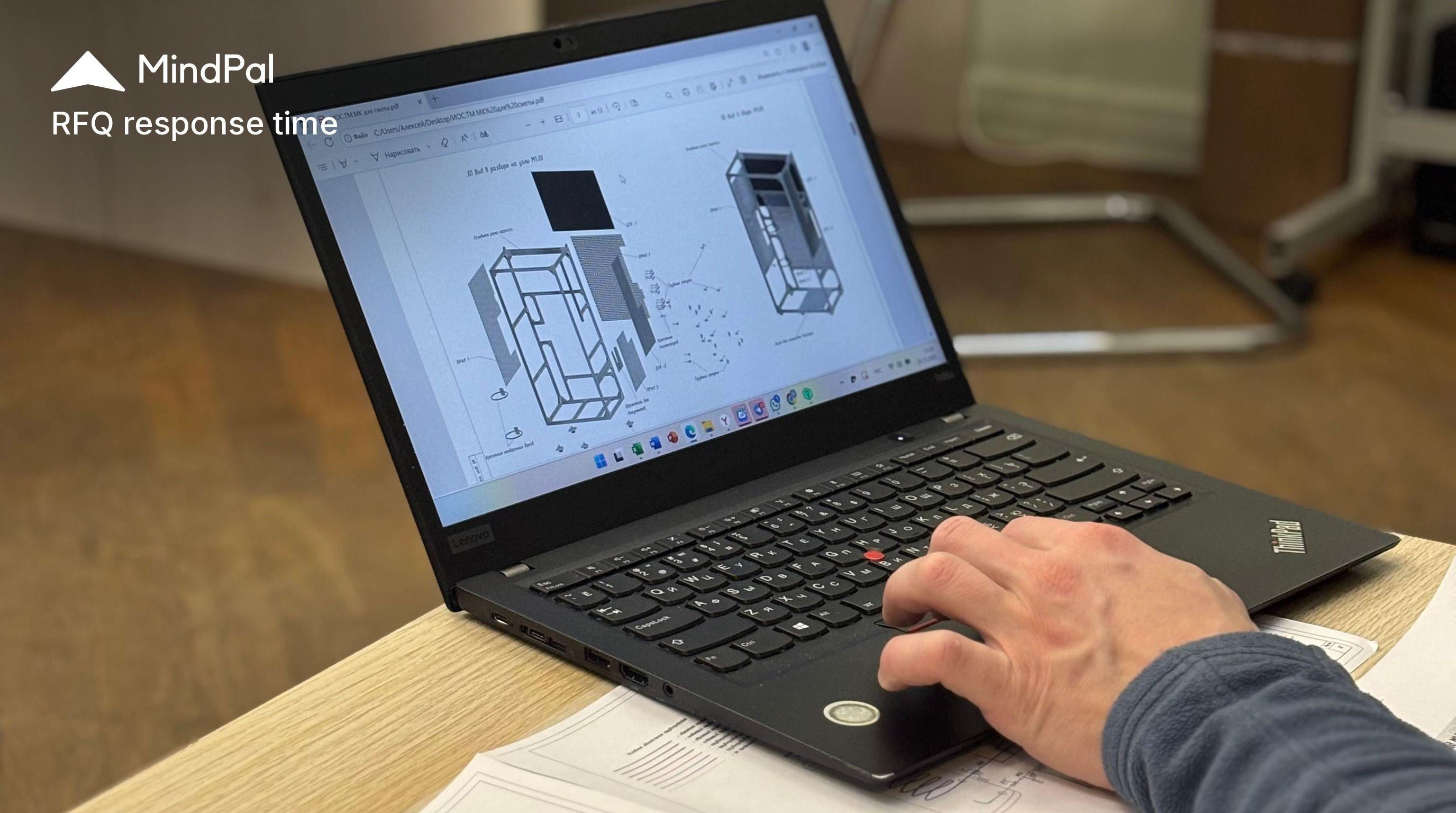
"We respond fast" is on a lot of shop websites. It means something different in every one of them. A buyer who sends an RFQ at 4 p.m. and hears nothing until Thursday has an answer to how fast you are, whatever the website says.
This guide separates the two clocks that matter, explains what really slows a quote down, and shows how to set a date you can hit. It does not give an industry average, because the public sources do not agree on one and a number we cannot check would not help you.
The short answer
Acknowledge the RFQ quickly, and give a quote date you can meet. Simple or repeat work can often go out the same day or the next business day. A new or complex package needs a committed date, not a vague promise to be fast. A date you hit beats a speed you only sometimes manage.
Two clocks: acknowledgment vs. the quote itself
There are two response times, and shops usually only measure one of them, if either.
- Acknowledgment time is how long until the buyer knows a person has the RFQ, the files arrived, and when to expect a price. It can be minutes. It needs no estimating.
- Quote time is how long until a priced, complete quote is in the buyer's inbox. It depends on the work.
A same-day "got it, quote by Thursday noon, and here is the one thing I need" is a good response, even though the price comes later. Silence followed by a fast quote is a worse experience than it looks on your internal report.
Why one target for every RFQ does not work
A repeat part with a documented routing and a current rate is a different job from a new assembly with eight components, a weld procedure and an outside heat treat.
Group RFQs into classes, and give each its own target:
- Repeat or reorder. Price from the last quote and the current material cost.
- Simple new part. One material, one or two operations, clear print.
- Complex or multi-part. Several operations, outside processes, assemblies, or tight tolerances.
- Needs engineering input. Unclear requirements, DFM questions, or a part you have not made before.
One shop-wide target such as "all quotes in 24 hours" is either too slow for the first class or a promise you will break on the last.
What actually delays a quote
Most delay is waiting, not working.
- Incomplete files. No flat pattern, a missing revision, a model and a print that disagree, no quantity. What each file tells you is covered in quoting from a DXF, STEP or PDF.
- Outside processes. Plating, heat treat, powder coat or anodizing prices and lead times that someone has to ask a vendor for.
- Material prices. A price that is out of date has to be checked before it goes on a quote.
- The queue. One estimator, one week with a big RFQ stack, and every quote waits behind the last.
- Reading and measuring. Unfolding the part, counting features, nesting, counting bends. The sums are quick; the preparation is not.
- Approval. A quote that needs an owner's signature waits for the owner.
Find out which of those is your biggest. It is rarely the arithmetic.
How to set a date you can hit
Work backwards from what the quote needs.
- Check the package at intake. If something is missing, ask right away, in the acknowledgment, and tell the buyer the clock starts when it arrives.
- Classify the RFQ. Use the classes above.
- Look at the queue and any outside quotes you need. If a vendor price is required, the quote date cannot be earlier than the vendor's answer.
- Check capacity before promising delivery. A quote that cannot be delivered on the date it states is a problem you created. The Fabricator's article on avoiding unprofitable work makes the case for not quoting orders you cannot deliver on time, and for tracking why you decline an RFQ.
- Give a date and a time, not "soon". "Thursday by noon" can be kept or missed. "Shortly" cannot.
If you cannot meet the date, tell the buyer before it passes. A short note beats silence.
Follow-up after the quote goes out
The clock does not stop when the quote is sent.
- Confirm the buyer received it, particularly for large packages.
- Say what the quote assumed, so they can correct it.
- Ask when they expect to decide, and put the date in your quote log.
- Follow up once with something useful, not a bare "any news?" For example, an offer to quote a second quantity or an alternate material.
- Record the outcome and the reason, win or lose. That record feeds quote win rate.
What to measure in your own shop
You do not need an industry benchmark to improve. Measure your own.
- Time to acknowledge, from receipt to first reply.
- Time to quote, from a complete package to the sent quote.
- Median and 90th percentile of each, by RFQ class. The median shows the normal case. The 90th percentile shows how bad the slow cases are, which is what buyers remember.
- Percentage of quotes sent by the date you promised.
- Quotes that waited on the customer, so you can separate your delay from theirs.
Two or three months of this will show where the time goes. Do not skip the last two; they tell you whether you are reliable, which is a different thing from fast.
Where software helps, and where an estimator still decides
Most of the time in a quote goes on reading files, measuring and applying the same rates again. Quoting software can take that off the desk: read the PDF, DXF or STEP, get a breakdown from your rates, and let the estimator review it. It does not decide what date you can commit to, whether to decline the job, or what a customer relationship is worth. Those stay with a person.
MindPal Forge is MindPal's quoting and estimating product for US and Canadian metal fabrication shops and machine shops. It reads PDF, DXF, STEP, IGES, STL, scans, photos and ZIP packs and calculates a cost from your machines, materials and rates, and the estimator reviews the breakdown before the quote goes out. You can upload a file to the instant quote demo with no signup. It uses sample rates, so judge the read and the breakdown, not the price.
For how the quote is built, see how to quote a CNC machining job and how to quote sheet metal fabrication. For the software side of a job-shop inbox, see job shop and machine shop quoting software and the 13-tool manufacturing quoting software comparison. Our older post on CNC quoting speed and margin argues the case for speed; this page is about how to measure and set it.
Frequently asked questions
How fast should a job shop respond to an RFQ?
Acknowledge it quickly, ideally the same business day, and commit to a date for the quote. Simple or repeat work can often be quoted the same day or the next business day. New or complex packages need a stated date. Published sources do not agree on one industry average, so use your own measured numbers.
Is acknowledging an RFQ the same as sending the quote?
No. Acknowledgment tells the buyer that a person has the request and when to expect a price. The quote is the priced offer. They are two separate clocks, and both are worth measuring.
How long should a complex or new part take to quote?
As long as it takes to read the package, get outside process prices and check your capacity, and no longer. Give the buyer a specific date and time when you acknowledge the RFQ, and tell them before it passes if it will slip.
What should I do when the drawing package is incomplete?
Say so in your first reply, list exactly what is missing, and state that the quote date counts from when it arrives. Do not guess at a missing tolerance, material or flat pattern; write down any assumption you do make on the quote.
Does a faster quote win more work?
Sometimes, and it depends on the customer and the part. Speed helps when a buyer is comparing several shops. It does not help if the price is wrong or the date you quote is one you cannot keep. Measure your own win rate by response time before drawing conclusions. See quote win rate.
What response time should I publish on my website?
Publish a commitment you meet almost every time, such as acknowledgment within one business day and quote dates by RFQ type. Check your own record first. A modest promise you keep is worth more than a fast one you miss.
Share this blog post via
Read other articles
1 / 0
SOLUTIONS
CLIENTS
INSIGHTS

This site is protected by reCAPTCHA and the Google Privacy Policy and Terms of Service apply.
Copyright © MindPal 2026. All Rights Reserved.