November 24, 2026
Scaling Industrial Revenue in 2027: Why Adding More Machinery Isn’t Enough
5 min read
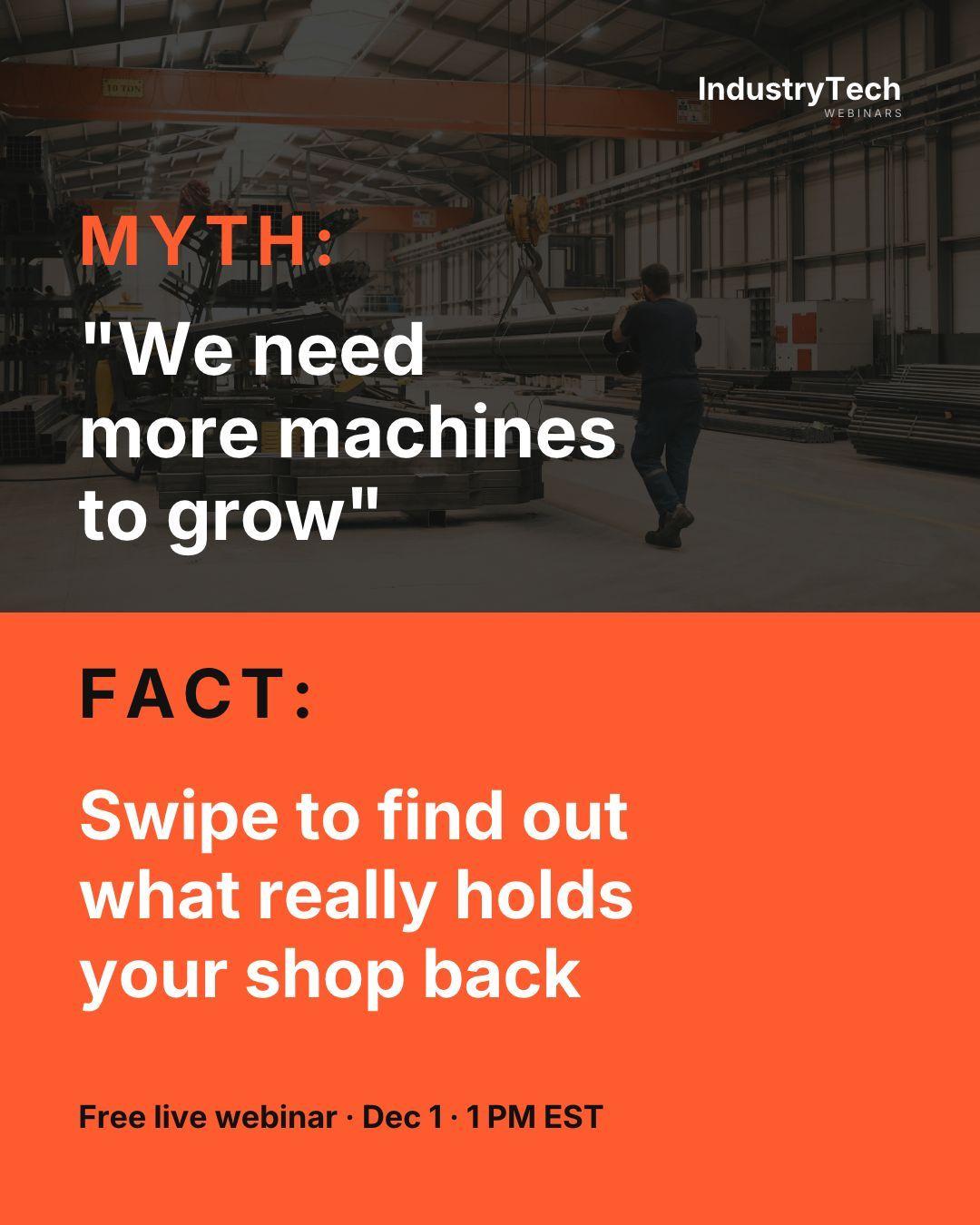
Heading into 2027, contract manufacturers, modular fabricators, and industrial assembly enterprises share a common commercial mandate: scale top-line revenue without eroding gross margins or overwhelming shop-floor capacity. In practice, however, aggressive sales growth frequently triggers operational chaos.
The bottlenecks rarely originate at the spindle or the welding cell. Instead, they emerge at the intersection of three critical workflows: manual RFQ quoting, disconnected sales-to-production planning, and unleveraged safety and compliance standards.
During the 4th Edition of the IndustryTech Webinar hosted by MindPal, international practitioners Beth Crowley (Reuters Events Board Member, Account Executive at Ardent Inc., Fractional COO), László István Huszai (CEO & Industrial Automation Expert), and Adrianne Pearson (Owner, Evolving EHS & Risk Mitigation Strategist)—moderated by MindPal CEO Chris Parjaszewski—unpacked the exact operational playbook required to scale industrial revenue sustainably.
1. Factory-to-Quote Automation: Closing the Loop Between Estimating and ERP
In custom fabrication and industrial manufacturing, speed and estimating accuracy win contracts. Yet across many mid-market plants, inbound Request for Quote (RFQ) processing still depends on manual data re-entry. Senior engineers and estimators spend days parsing complex technical drawings, bills of materials, and multi-page specifications into spreadsheets or legacy ERP systems.
This manual bottleneck creates two immediate revenue leaks:
- Lost bids to faster competitors capable of turning around accurate quotes in hours rather than weeks.
- Margin erosion caused by rushed estimates that overlook real-time machine availability, power loads, and scheduled maintenance windows.
The solution lies in closing the ERP loop. By deploying specialized AI automation workflows, manufacturers can ingest complex technical specifications and RFQs directly into ERP and MES platforms without manual re-entry. When the estimating desk has live visibility into machine-level utilization, commercial teams can commit to firm, profitable lead times.
2. Lean Operations: Aligning Commercial Pipelines with Factory Reality
A second major barrier to scaling revenue is the operational silo between front-office sales and shop-floor scheduling. When sales teams close deals without real-time visibility into plant capacity, work-in-process buffers pile up, expedited freight costs spike, and missed deadlines result in costly contractual penalties.
Applying Lean Six Sigma principles compresses end-to-end lead times—accelerating throughput from quote acceptance to dock dispatch. Key execution priorities include:
- Eliminating administrative friction between estimators, sales reps, and production planners.
- Building a root-cause problem-solving culture on the shop floor so supplier delays or equipment bottlenecks are resolved before they impact customer delivery schedules.
- Phased shop-floor cell retooling, allowing plants to integrate new automated machinery without halting baseline production.
3. EHS & Risk Mitigation: Turning Safety Compliance into a Commercial Asset
Enterprise buyers, tier-1 general contractors, and corporate developers no longer select manufacturing partners on unit price alone. Procurement teams increasingly evaluate suppliers based on total cost-of-risk reduction, supply-chain stability, and regulatory compliance.
Shifting hazardous, craft-heavy manual assembly off field jobsites and into controlled factory environments drastically cuts recordable incidents, worker compensation exposure, and OSHA liabilities. Manufacturers that maintain auditable EHS records, ergonomic shop-floor setups, and strict environmental compliance can leverage these metrics directly in enterprise sales pitches—positioning themselves as strategic risk-mitigation partners rather than commodity vendors.
Three Pillars for Profitable Industrial Growth in 2027
Scaling industrial revenue in 2027 requires unifying commercial agility with operational discipline across three core pillars:
- Automated RFQ-to-ERP Workflows that eliminate manual quoting bottlenecks and sync sales commitments with real-time machine capacity.
- Lean Operational Resilience that strips out lead-time delays and aligns revenue targets with genuine shop-floor throughput.
- Commercialized EHS Excellence that transforms plant safety and compliance into a decisive advantage in high-value enterprise bids.
Access the Full IndustryTech Webinar 4 Strategy Pack
Ready to implement these frameworks in your organization? Download the complete Executive Strategy Pack—featuring the operational checklists and factory-to-quote automation blueprints covered during the roundtable:
- Get the Recap & Checklists: https://mindpal.co/webinar
- View the Event on LinkedIn: IndustryTech Webinar – 4th Edition
Share this blog post via
Read other articles
1 / 0
SOLUTIONS
CLIENTS
INSIGHTS

This site is protected by reCAPTCHA and the Google Privacy Policy and Terms of Service apply.
Copyright © MindPal 2026. All Rights Reserved.