October 13, 2026
Automating Flat Metal Sheet Quoting: How AI Transforms RFQ Workflows for Modern Metal Shops
7 min read
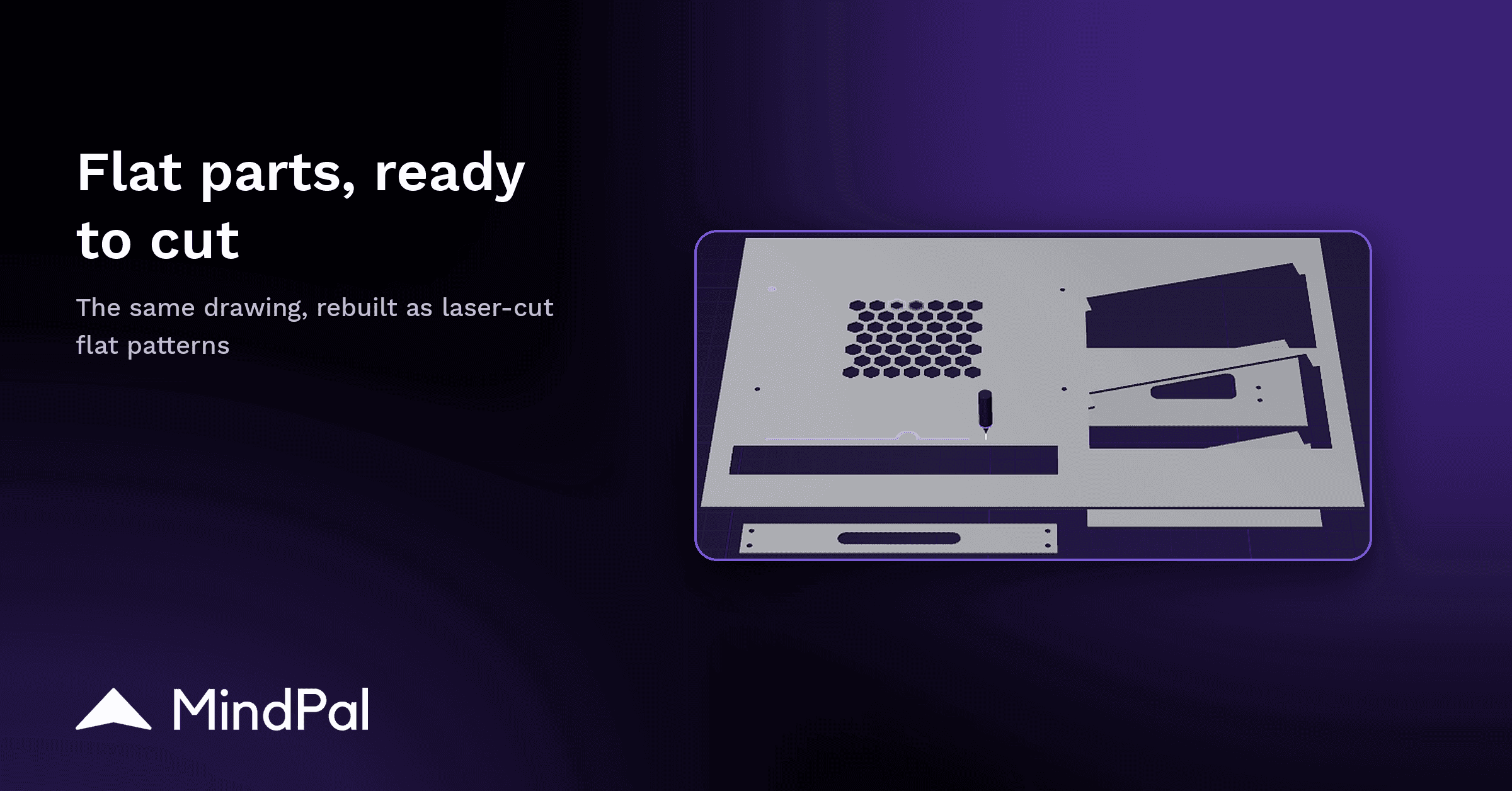
Introduction: The Quoting Bottleneck in Sheet Metal Fabrication
In the fast-moving sheet metal and CNC fabrication sector, the first shop to return an accurate, competitive quote often wins the contract. Yet, many fabrication businesses remain trapped in an outdated, labor-intensive Request for Quote (RFQ) cycle.
A single RFQ for flat sheet metal- whether involving laser cutting, waterjet cutting, punching, or secondary bending and finishing - demands hours of an engineer’s or estimator’s focused attention. They must open disparate 2D drawings (DXF, DWG, PDF) or 3D models (STEP, STP), manually trace cutting perimeters, evaluate material nest yield, factor in scrap rates, calculate piercing and machine time, and manually calculate margin targets.
This manual bottleneck introduces three distinct business risks:
- Lost Revenue to Faster Competitors: Buyers rarely wait days for an estimate; while your team analyzes toolpaths, a faster competitor often closes the deal.
- Pricing Inconsistency: Subjective formulas and human variation mean quotes differ between senior and junior estimators.
- Wasted Engineering Hours: Highly skilled manufacturing engineers spend hours quoting jobs that have an average win rate of only 20% to 30%.
Artificial Intelligence (AI) and automated geometry engines are fundamentally transforming this landscape, turning days of engineering back-and-forth into 30-second automated quotes.
The Complexities of Quoting Flat Sheet Metal & 2.5D CNC Cutting
Flat metal sheet parts look deceptively simple compared to complex 5-axis milled blocks, but automated pricing requires factoring in nuanced physical variables:
- Cut Length & Piercing Overhead: Machine cycle time depends heavily on total cut contour length, pierce counts, sheet thickness, and cutting gas (nitrogen, oxygen, or shop air).
- Nesting & Material Scrap Factor: Flat sheets incur raw sheet waste. Estimators must evaluate bounding boxes, nesting efficiency, and scrap disposal or recycling margins.
- Feature & Hole Recognition: Micro-joints, interior cutouts, tight hole tolerances, and deburring needs must be identified early to avoid costly shop-floor surprises.
- Secondary Operations & Post-Processing: Flat parts often require graining, deburring, anodizing, powder coating, plating, or heat treatment before dispatch.
- Quantity Tiers: Amortizing setup fees, sheet handling, and machine changeovers across 1, 10, 100, or 1,000+ units requires real-time algorithmic scaling.
How AI & Algorithmic Geometry Automate the RFQ Workflow
Modern automated quoting engines bridge the gap between computer-aided design (CAD) files and commercial ERP/CRM records:
[CAD / 2D DXF / PDF Drawing]
↓
[Geometric Feature Extraction & 3D Render]
↓
[Automated Cycle Time, Nesting & Material Cost Engine]
↓
[Shop Rule & Margin Calibration]
↓
[Instant PDF Quote + One-Click Order Export]
1. Multi-Format Ingestion & Feature Recognition
AI-powered systems parse standard fabrication formats including .DXF, .PDF, .STEP, .STP, and zipped assemblies. Instead of requiring manual toolpath generation in CAM software, the engine extracts geometric primitives: outer perimeter, internal contours, surface area, and cut thickness.
2. Physics-Based Cycle Time & Material Costing
By cross-referencing material density (aluminum, stainless steel, mild steel, copper, or titanium) and cutting feed rates with part geometry, the system computes cycle time and piercing parameters in seconds.
3. Dynamic Margin & Shop Rate Application
Custom rules map machine hourly rates, target margin percentages, consumable costs, and minimum order values (MOVs) onto the baseline manufacturing cost.
4. Self-Service Customer Portals
Rather than emailing drawings back and forth, fabricators can embed an interactive quotation widget directly onto their website, allowing B2B buyers to upload files, preview 3D parts, and receive prices instantly.
MindPal CNC RFQ: Fast Quoting Built for Custom Fabricators
A prominent example of this technology in action is MindPal's RFQ Engine. MindPal has developed a specialized manufacturing quotation platform that turns raw technical drawings into itemized, customer-ready proposals in approximately 30 seconds.
Key Capabilities of MindPal’s Quoting Engine
- Universal File Ingestion: Supports 3D models (STEP, STP) as well as flat 2D drawings (DXF, PDF) without demanding setup or conversion plugins.
- Interactive 3D/2D Viewer with Instant Pricing: The moment a file lands, the engine renders the part in an interactive viewer where estimators or clients can rotate and inspect the geometry, with a real-time price attached from the start.
- Automated Feature & Geometry Recognition: The system extracts holes, threads, tight tolerances, and contours while flagging potential manufacturability issues.
- Live Material & Finishing Configurator: Users can toggle between materials (aluminum, stainless steel, titanium, etc.) and post-treatments (powder coating, anodizing, heat treating), watching unit prices and lead times update dynamically.
- Real-Time Multi-Quantity Tiering: Automatically calculates stepped volume breaks ($1, $10, $100+ units).
- Client-Ready PDF & ERP Sync: Generates a branded, downloadable PDF estimate and syncs quote data directly with internal CRM and ERP systems.
- One-Click Reordering: Every generated estimate is preserved in a portal, enabling recurring buyers to reorder past flat sheet parts with a single click.
- IP Protection & Security: MindPal ensures files are encrypted in transit, never used to train public AI models, and backed by mutual NDAs to protect proprietary CAD IP.
Comparison: Traditional Manual Quoting vs. MindPal Automated Quoting
| Operational Dimension | Traditional Manual Quoting | MindPal AI Quoting Engine |
| Turnaround Time | 4 to 48 hours | ~30 seconds |
| File Parsing | Manual import into CAD/CAM and manual inspection | Automatic geometry & feature extraction |
| Pricing Consistency | High variance across estimators | Consistent application of shop formulas |
| Customer Experience | Slow email threads and back-and-forth communication | Interactive viewer with instant pricing updates |
| Volume Scaling | Recalculated manually in spreadsheets | Automated real-time quantity tiering |
| Engineering Overhead | 30-60 minutes per RFQ | Fully automated / zero manual CAM setup |
Business Impact: Why Metal Shops Must Automate Quoting
Transitioning to automated quoting is not merely a software upgrade; it directly improves top-line growth and bottom-line efficiency:
- Higher RFQ Capture & Win Rates: Manufacturing buyers increasingly expect Amazon-like responsiveness. Shops that deliver immediate, transparent quotes consistently see win-rate gains over slower competitors.
- Optimized Labor Allocation: Removing repetitive CAD measuring frees senior manufacturing engineers to focus on CAM programming, machine setup, and high-margin bespoke projects.
- Standardized Margins: Built-in rules prevent underquoting errors caused by missed finishes, forgotten setup fees, or misjudged scrap volumes.
Conclusion & Next Steps
In modern flat sheet metal cutting and CNC machining, speed to quote is the primary differentiator. Solutions like MindPal demonstrate that machine shops no longer need to sacrifice hours of engineering time simply to determine if a job is viable. By deploying an AI-driven RFQ pipeline, fabricators can protect margins, win more jobs, and give their clients an instant, modern purchasing experience.
To test this workflow firsthand, explore the interactive demo at mindpal.co/cnc-rfq.
Share this blog post via
Read other articles
1 / 0
FOR BUSINESS
Manufacturing for construction
Recruitment
FOR INDIVIDUALS
SOLUTIONS

This site is protected by reCAPTCHA and the Google Privacy Policy and Terms of Service apply.
Copyright © MindPal 2026. All Rights Reserved.