August 4, 2026
The Return of the Prodigal Sons
8 min read
Reshoring—the practice of bringing manufacturing back home—was heralded as the ultimate step toward economic sovereignty in an era of perma-crisis. In the United States, however, the reality is falling short of the rhetoric. The primary culprit? A severely constriced labor market.
Trump’s Call: Come on Home
Rebuilding American manufacturing has been a cornerstone of the current White House administration's agenda. While the trend has accelerated recently, bombastic claims of "the greatest wave of reindustrialization in history" are overstated. Reshoring is driven less by ideological economic patriotism and more by cold, hard corporate calculation. Fully 77 percent of respondents in an iFactory survey admit that geopolitical flashpoints around Iran and Taiwan are pushing corporate boards toward domestic investments. Peace of mind is beating out traditional economic calculus.
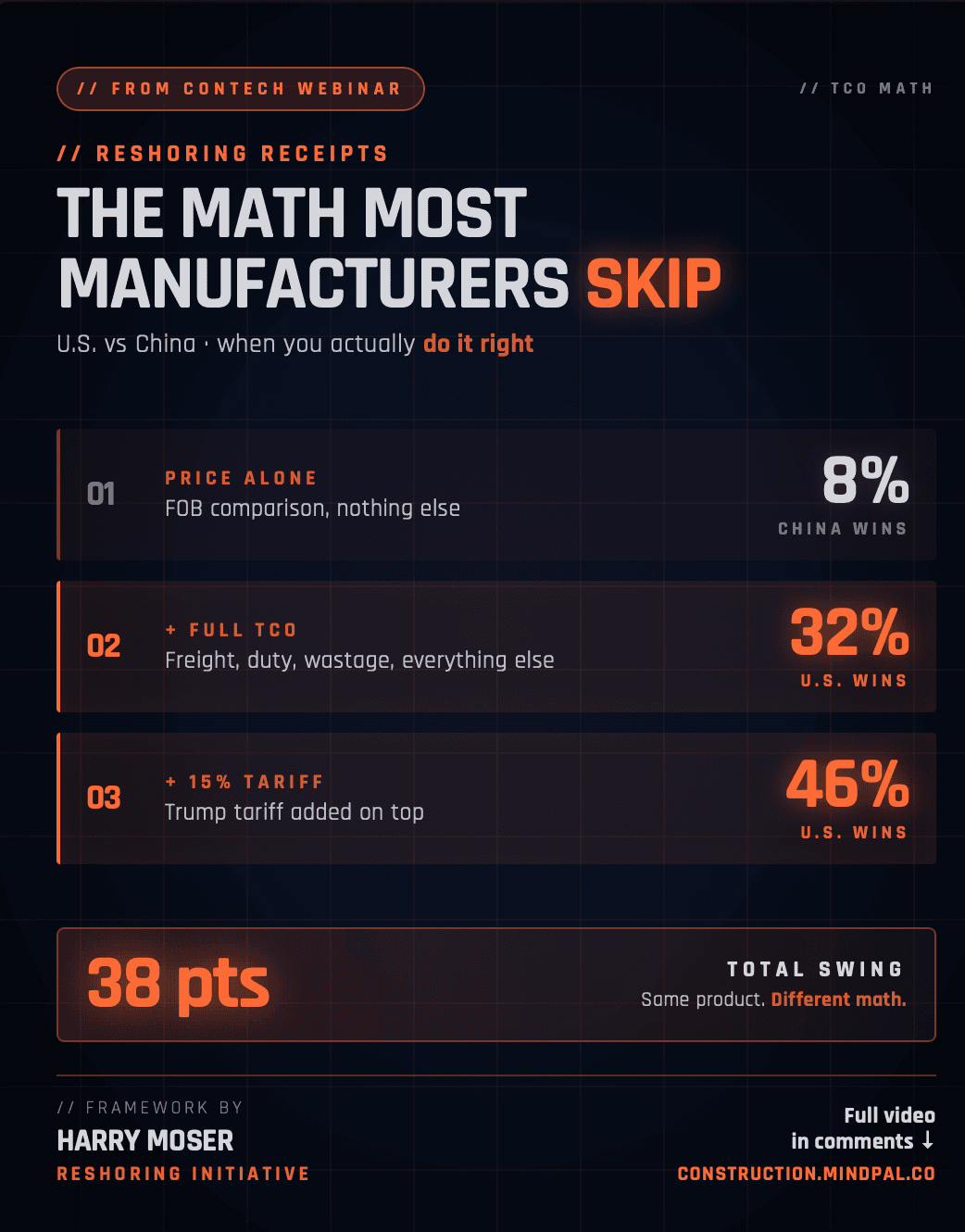
The Trump administration's aggressive tariff policy—slapping import duties not just on Asian nations and Europe, but also on next-door neighbor Mexico—forces companies selling in the U.S. to build local factories to dodge tariff risks.
Moreover, investors can tap into massive federal grants and subsidies. The CHIPS Act, for instance, boasts a $52 billion budget to bolster semiconductor manufacturing. Meanwhile, the Inflation Reduction Act pumps additional billions into private green energy investments.
This policy is yielding results, propelled by strategic sectors. Thirty-five percent of total investments go into semiconductors and electronics. Corporate giants like TSMC, Micron, Intel, and Samsung are erecting mega-fabs, primarily across Arizona, Texas, Ohio, and New York. When it comes to batteries and EV cells, the market is driven by American-Asian partnerships, with brands like GM, Ford, LG, and Panasonic investing heavily in Georgia, Kentucky, Tennessee, and Michigan.
Yet, the sharpest spikes in job creation are occurring in defense and automotive. Surging tariffs on imported vehicles have re-energized domestic assembly lines, while the Pentagon lavishly funds cutting-edge defense innovations—stipulating that they must be built on U.S. soil.
Over the past two years, capital expenditures in the U.S. surpassed $500 billion. Megawatt-hungry data centers, driven by the AI boom, are also exploding, requiring massive additional energy investments.
But macroeconomic indicators tell a different story. The Kearney Reshoring Index remains stubbornly in the negative, meaning America still imports more manufactured goods than it produces domestically. Most companies know how to crunch numbers; they are shifting production out of an adversarial China not to the U.S., but to friendlier nations in Southeast Asia or to neighboring Mexico.
The Labor Bottleneck
America currently faces several critical bottlenecks stymieing its reindustrialization. First and foremost is the labor shortage. Despite low unemployment, U.S. companies are clamoring for an additional 600,000 skilled manufacturing workers and at least 450,000 construction personnel.
The energy infrastructure also requires a massive overhaul. Artificial intelligence consumes gargantuan amounts of power; running a massive data center without a dedicated power plant next door has become virtually pointless. Finally, to build a viable factory in the U.S. today, it must be highly automated, relying on total optimization and robotics. Without this, domestic production is simply unprofitable.
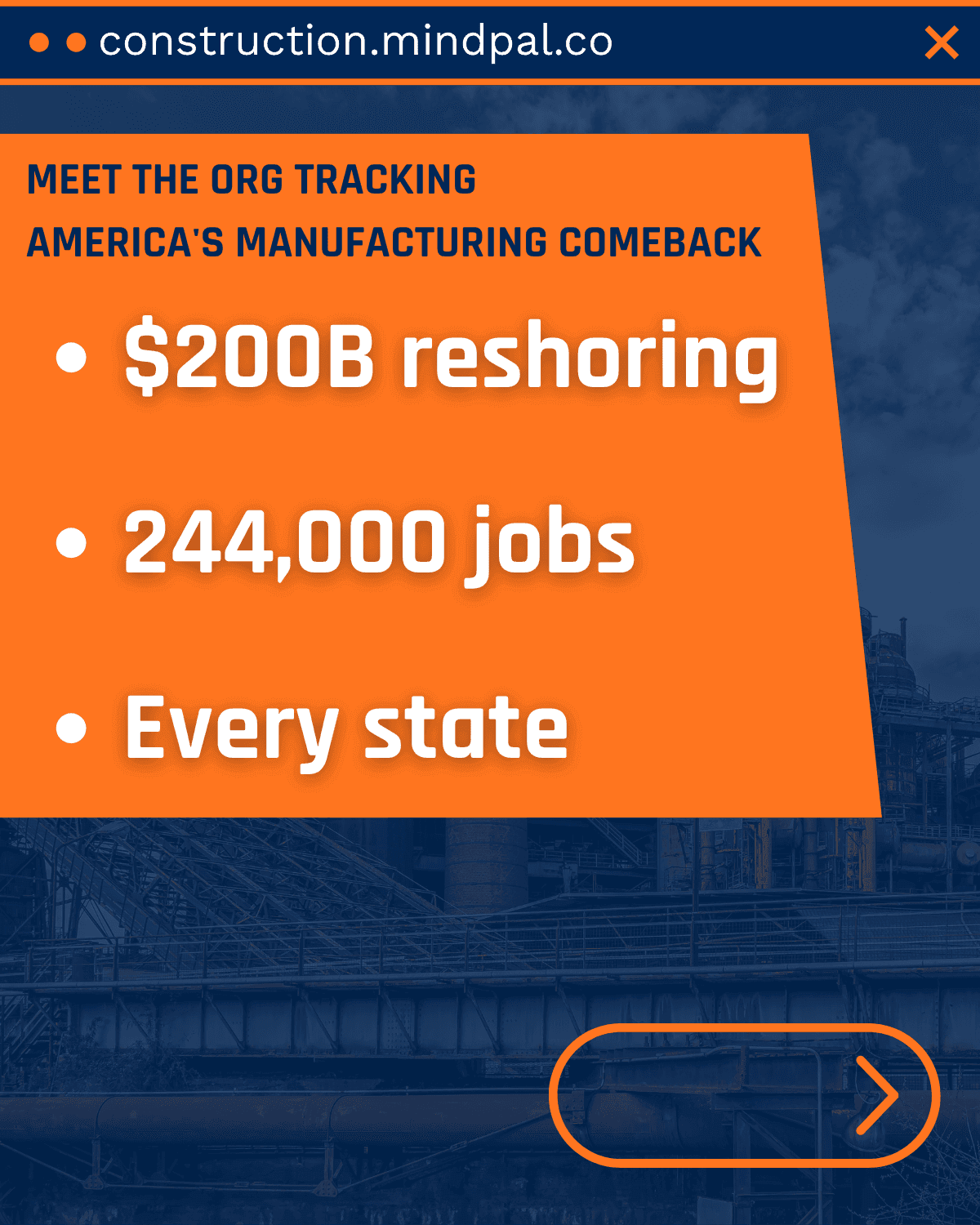
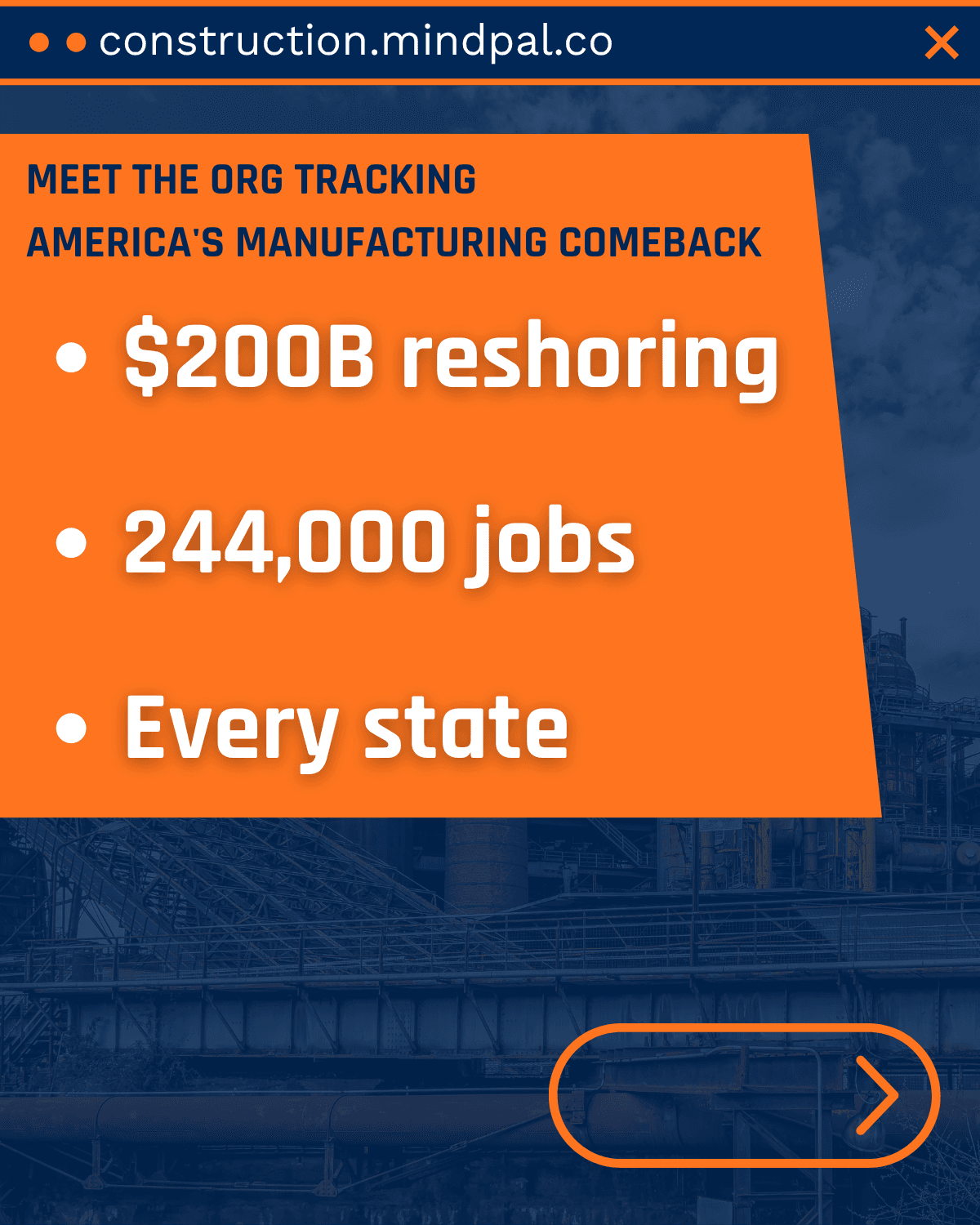
The latest Reshoring Survey reveals exactly how these dynamics are playing out, as American industry collides with brutal operational realities. To be sure, bringing manufacturing home generated 244,000 new jobs over the past year—bringing the 15-year total to an impressive 2 million. Furthermore, 90 percent of these new hiring projects are in the high-tech sector, signaling a metamorphosis toward innovation rather than traditional industries like textiles.
New electronics and battery plants are cropping up across Texas, South Carolina, and Arizona. But not everyone is celebrating. Investors complain about a severe shortage of engineers and skilled labor, leaving some newly built factories idle. To break this human dependency, companies are doubling down on robotics and AI. Harry Moser, head of the Reshoring Initiative, also points to regulatory instability and constant tariff juggling, which paralyze long-term corporate planning.
Nonetheless, global uncertainty compels companies to secure their supply chains. With labor costs rising in China and a strong dollar, the appeal of localized investment continues to mount. According to a Bain & Company study, 81 percent of executives intend to increase geographic proximity to their target markets, and 18 percent are already doing so. The process is underway, and it is growing increasingly sophisticated.
Crises Fuel Domestic Industry
The U.S. saw its biggest reshoring surge during the Covid-19 pandemic when the global economy ground to a halt. Yet last year, total manufactured goods imports rose by 4.6 percent, nearing $3 trillion, while domestic manufacturing dipped slightly by 0.4 percent (a $28 billion decline). In uncertain times, companies hedge their bets however they can. They temporarily reroute facilities to Vietnam, Thailand, or India, while hoarding inventories for a rainy day.
Mexico offers a fascinating case study. In 2025, America's southern neighbor overtook China as the leading source of high-tech imports, cementing its status as Washington's most vital strategic partner in this arena. The technological integration of North America is a done deal. Mexico pulled in a record $41 billion in foreign direct investment—a 10.8 percent year-over-year jump—and its momentum this year looks just as formidable. The country has climbed to 19th place in Kearney’s Foreign Direct Investment Confidence Index, becoming a premier destination for American capital. While wages and real estate prices are climbing there too, regions like Monterrey, Ciudad Juárez, and Querétaro are morphing into America's new industrial backyard.
Even more intriguing are the instances of production shifting directly from Asia back to U.S. soil. Take the solar industry: countervailing duties have rendered overseas production of panels and equipment far less lucrative. Consequently, many firms have pulled up stakes in Vietnam, Thailand, Cambodia, India, and Indonesia to return to the States.
The pharmaceutical sector is seeing a similar migration from India and China back to the U.S., driven by some of the most aggressive government market interventions in recent history. With up to 90 percent of active pharmaceutical ingredients (APIs) and over 60 percent of finished medications produced abroad, the industry faced an ultimatum at the start of this year: build domestic factories or face a staggering 100 percent import tariff.
Giants like Eli Lilly, AstraZeneca, and Regeneron have already committed billions to domestic production. In contrast, Pfizer, GlaxoSmithKline, and Johnson & Johnson have yet to pull the trigger on major shifts, meaning their products could soon see sharp price hikes. The total value of projected investments in the pharma sector approaches $500 billion.
In the reshoring arena, the U.S. competes with Canada while taking a somewhat patronizing stance toward its northern neighbor. Ongoing negotiations with Mexico span other critical sectors, including automotive, steel, and aluminum. One thing is certain: Donald Trump is delivering on his promises, and the return of manufacturing to America has become an undeniable reality.
Tom Teluk
PR&Communication Head
ConTech by MindPal
Share this blog post via
Read other articles
1 / 0
FOR BUSINESS
Manufacturing for construction
Recruitment
FOR INDIVIDUALS
SOLUTIONS

This site is protected by reCAPTCHA and the Google Privacy Policy and Terms of Service apply.
Copyright © MindPal 2026. All Rights Reserved.