March 26, 2026
AI for the Construction Sector: Intelligent Planning and the Fight for Margins
6 min read
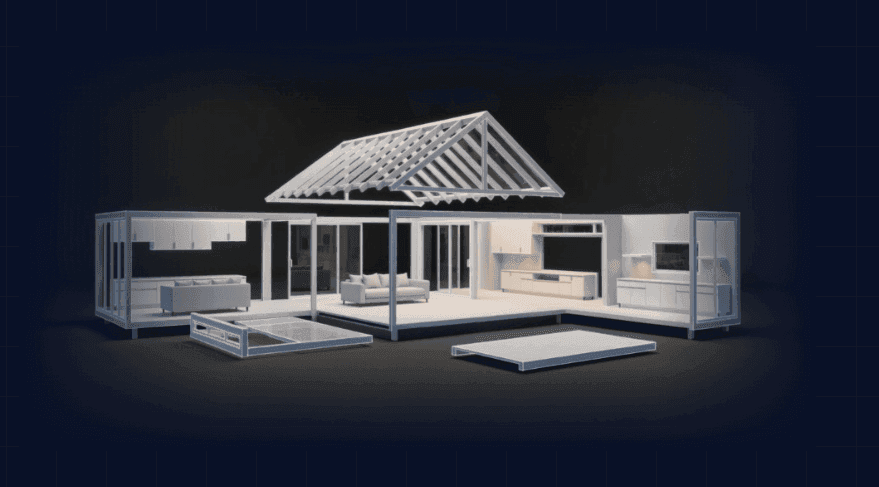
The global construction sector, traditionally viewed as one of the most conservative regarding digital adaptation, is currently in a critical phase of transformation known as Autonomous Construction.
Macroeconomic trend analysis indicates that this industry—which generates a significant portion of global GDP—is facing an unprecedented confluence of challenges: from chronic skilled labor shortages and raw material price volatility driven by tariff policies to pressure for decarbonization and sustainability. In this context, Artificial Intelligence (AI), particularly in its agentic form, is no longer treated as a futuristic add-on but as a fundamental tool for protecting operating margins and ensuring business continuity.
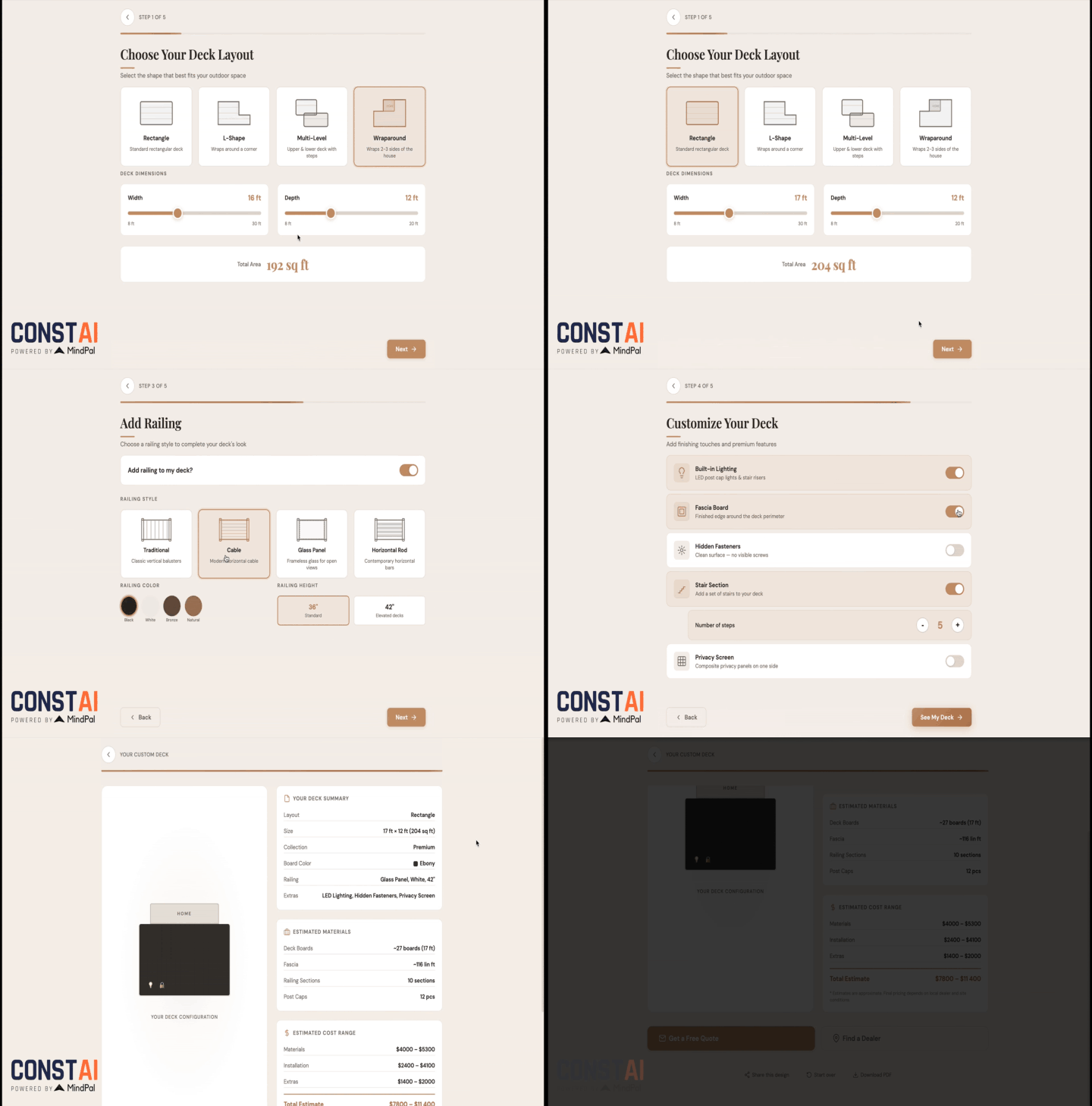
The transition from simple digital tools to advanced AI ecosystems, such as construction.mindpal.co redefines how project data is synthesized and utilized. Unlike traditional automation based on rigid "if-then" rules, modern AI agents are characterized by their ability to reason, perform multi-step planning, and adapt to the dynamically changing conditions of a construction site.
Global Spending and Growth Projections to 2030
The global construction market shows a steady upward trajectory despite periodic economic fluctuations. It is estimated that global construction spending will reach $5.0 trillion by 2030, maintaining a Compound Annual Growth Rate (CAGR) of 3.5% during the 2024–2030 period. Other analyses, using a broader market definition, suggest growth from $11.39 trillion in 2024 to $16.11 trillion in 2030. This discrepancy results from different approaches to including engineering services, land planning, and infrastructure maintenance.
| Global Market Segment | 2024 Value (USD) | CAGR (2024–2030) | Growth Characteristics |
| General Buildings | $2.2 Trillion | 4.1% | Dominance of residential and office construction |
| Heavy & Civil Engineering | Est. $1.8 Trillion | 3.4% | Investments in public infrastructure and energy |
| Land Planning & Development | N/A | 8.2% | Fastest-growing specialized segment |
| Private Sector | $11.86 Trillion | 5.32% | Largest segment by market share |
Source: MindPal.co, 2026
The US Construction Market: Specifics and Challenges
The US market is estimated at $1.1 trillion in 2024 in terms of direct operating expenditures, with Census Bureau data indicating total construction spending (SAAR) exceeding $2.139 trillion as of July 2025. The United States represents a unique environment for AI implementation due to high digital maturity and severe structural issues, such as labor shortages.
The demand for new workers in the US construction sector is alarming. It is estimated that the industry must attract approximately 500,000 workers in 2026 to fulfill planned contracts. The situation is exacerbated by demographic shifts: over 20% of workers are over 55, while less than 3% of young people consider a career in construction. This competency gap directly translates into increased labor costs and project delays, making the mindpal.co/construction offering—focused on Knowledge-based AI—incredibly timely.
The AI in Construction Market: Forecasts and Drivers
The AI market dedicated to the construction industry is in a phase of exponential growth.
| Region / Component | 2024 Value (USD) | 2030 Forecast (USD) | CAGR |
| Global AI in Construction Market | $2.4 Billion | $12.1 Billion | 31.0% |
| US Market (AI in Construction) | $713.7 Million | Est. $3.5 Billion | ~30% |
| Solutions Component | Est. $1.6 Billion | $8.0 Billion | 30.5% |
| Services Component | N/A | N/A | 32.1% |
Source: MindPal.co, 2026
Where AI Automation and Agents Deliver the Most Value
Analysis of construction processes identifies four main areas where AI agents can revolutionize current practices:
- Pre-construction & Estimating: AI agents can automatically identify and count components on 2D plans and 3D models, mapping them to current material and labor price lists with 98-99% accuracy.
- Scheduling & Resource Management: Using generative AI for "optioneering" to find the shortest critical path. Agents can dynamically react to delivery delays or worker absences without manual intervention.
- Site Monitoring & Safety: Integration of computer vision with 360° cameras and drones to compare actual status with the BIM model, reducing legal dispute risks by 60%.
- Project Administration & Back-office: Automating RFIs (Requests for Information), submittals, and subcontractor invoices, reducing accounting operating costs by 60-70%.
Economic Benefit Analysis: ROI and Savings
| Operational Process | Traditional Method | With AI Automation | Gain / Saving |
| Takeoff | 2 weeks (30-story bldg) | 48 hours | 85% time reduction |
| Invoice Processing | $15 – $25 / invoice | $3 – $5 / invoice | 60-75% cost reduction |
| Scheduling | Months of manual planning | Hours of AI simulation | 17% shorter projects |
| Progress Documentation | 40h / month (monitoring) | 4h / month (remote) | 10x faster |
| RFI Handling | 15-20 min / document | 2-3 min / document | 80-87% time reduction |
Source: MindPal.co, 2026
Companies report an average 3.7x return on investment (ROI) for AI systems in construction, with top performers reaching up to 10.3x. For a firm with $100M in turnover, each additional AI technology implemented generates an average of $1.14M in additional profit.
Sector Transformation by 2030
The 2030 horizon envisions construction as a "partnership between humans, agents, and robots." It is predicted that by 2028, autonomous agents will make approximately 15% of all work-related decisions, a massive leap from less than 1% in 2024.
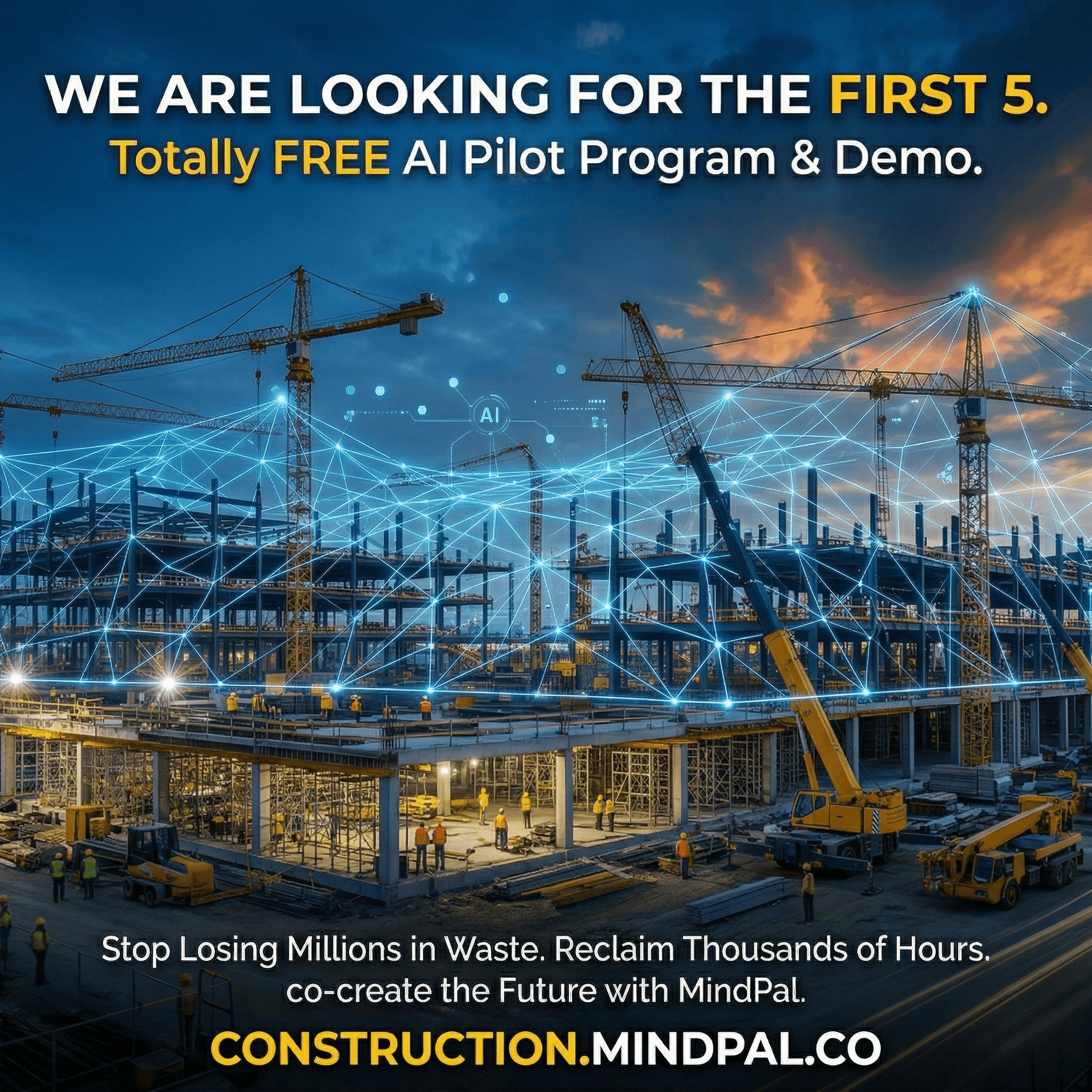
MindPal, with its construction.mindpal.co offering, provides the tools to address these fundamental industry problems. The shift toward "Autonomic Construction" is no longer an option but a necessity forced by global market dynamics and demographics.
Tomasz Teluk,
PR & Marketing Head,
MindPal.co
https://www.linkedin.com/in/tomasz-teluk-273b917a/
Share this blog post via
Read other articles
1 / 0
This site is protected by reCAPTCHA and the Google Privacy Policy and Terms of Service apply.
Copyright © MindPal 2026. All Right Reserved.